
Raising Our Little Nepali Speakers Abroad: The Ultimate Family Guide to Bilingual Success
In homes scattered across the globe, far from the hills and valleys of Nepal, a quiet but powerful mission unfolds every day. We are not simply raising children—we are nurturing identity, preserving heritage, and building bridges between generations. Ensuring our children speak Nepali while growing up in an English-dominant environment is not just a linguistic goal—it is a cultural commitment.
The challenge is real. Outside our homes, English dominates every interaction—schools, media, friendships, and even entertainment. Inside, we strive to keep Nepali alive, vibrant, and meaningful. The good news is this: with intentional strategies, emotional connection, and consistent practice, raising confident Nepali-speaking children abroad is entirely achievable.
This comprehensive guide outlines proven, practical, and deeply effective methods to help families succeed in raising bilingual Nepali children—starting from infancy to early literacy and beyond.
Building a Nepali Language Environment at Home
Language begins with exposure. Before children speak, they absorb. The foundation of bilingualism lies in consistent and meaningful auditory input.
Create a Daily Nepali Soundscape
We immerse our children in Nepali by making it the background rhythm of daily life.
- Play Nepali nursery rhymes and folk songs during routine moments like meals, bath time, and car rides
- Repeat familiar tunes to build recognition and comfort
- Use music as a tool for memory—melody helps language stick effortlessly
Children naturally mimic what they hear most often. When Nepali becomes familiar, it becomes safe—and eventually, it becomes spoken.
Narrate Everyday Life in Nepali
We turn ordinary moments into language-learning opportunities.
- Describe actions: “Aba hami sutna janchau”
- Identify objects: “Yo kalo kukur ho”
- Express emotions and choices in Nepali
Even when children respond in English, they are actively processing Nepali. This silent absorption forms a powerful passive vocabulary base, which later transforms into active speech.
Making Nepali Visible in Daily Life
Children learn best when language is both heard and seen. Visual exposure strengthens recognition and builds familiarity.
Label Your Living Space
We transform our homes into interactive language environments.
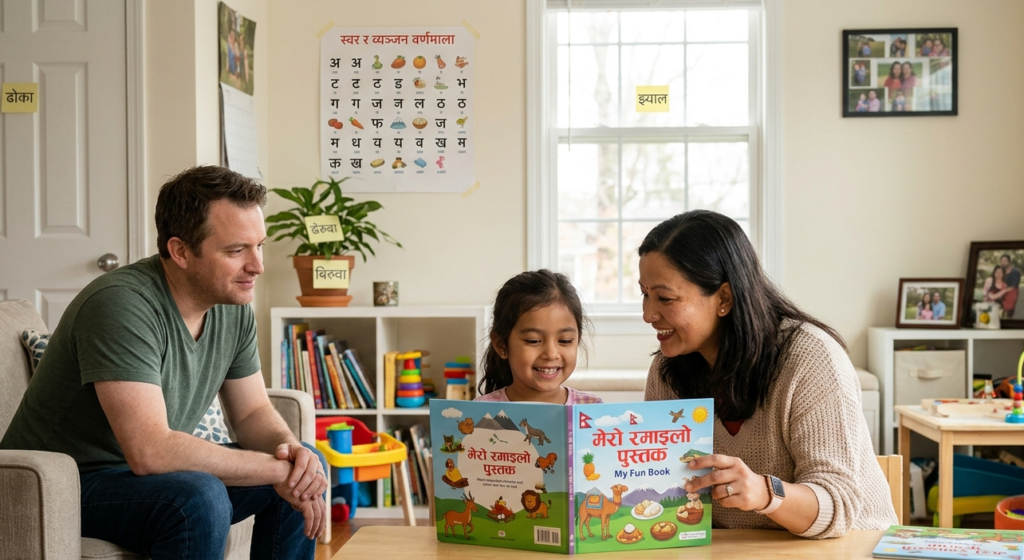
- Label doors (Dhoka), windows (Jhyala), tables (Tebal), and everyday items
- Use colorful, child-friendly labels to maintain engagement
- Encourage children to point, read, and repeat words naturally
This simple technique integrates Nepali into their physical reality—not as a subject, but as a living language.
Use Culturally Rich Storybooks
Books are powerful tools for emotional and linguistic connection.
We choose illustrated Nepali children’s books that reflect:
- Village life and traditional homes
- Festivals such as Dashain and Tihar
- Family relationships and daily routines
When children see familiar cultural elements, they form a deeper bond with the language. Reading becomes more than literacy—it becomes identity-building.
Introducing Devanagari: The Foundation of Literacy
Around ages 5 to 6, children begin to recognize patterns and symbols. This is the ideal stage to introduce the Devanagari script in a playful and engaging way.
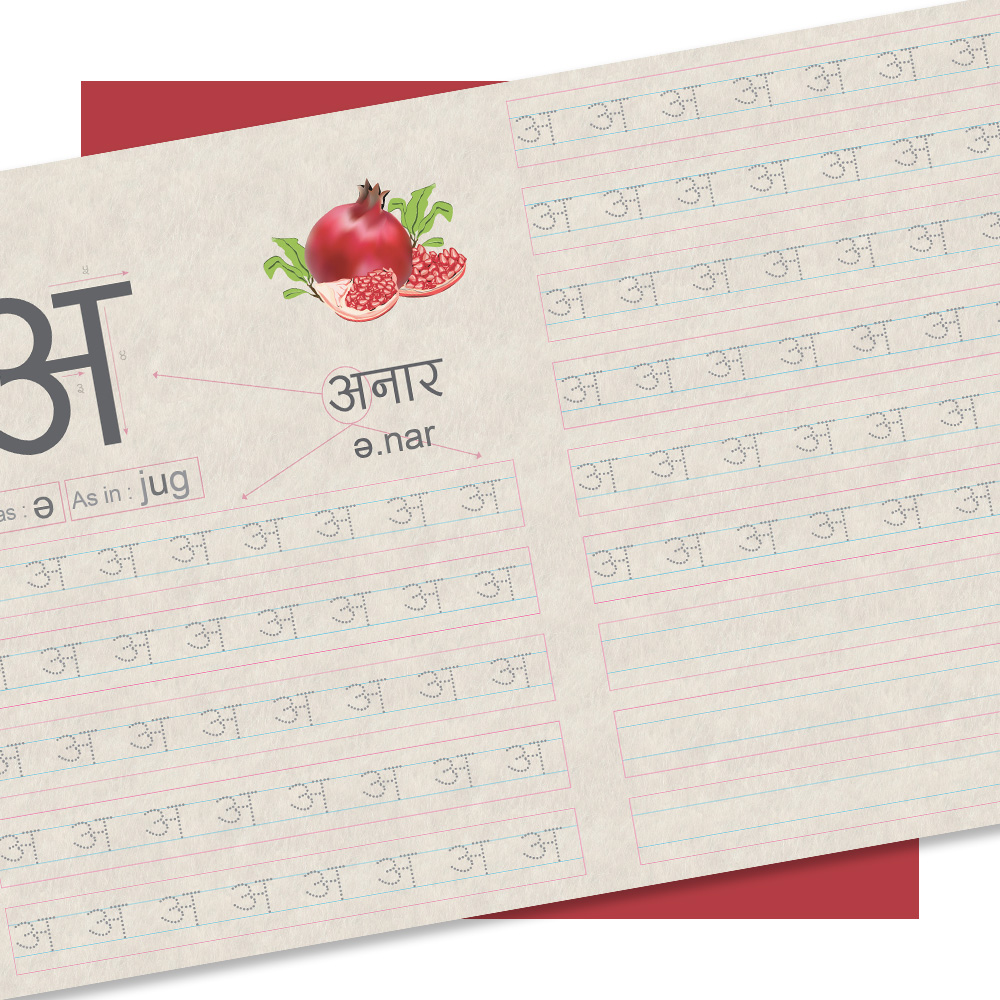
Start with Swar (Vowels)
We begin with the basics:
- Introduce vowels through repetition and sound association
- Use tactile methods like tracing letters in sand, rice, or textured cards
- Reinforce learning through songs and visual charts
Unlock the Barahkhari System
We present the Nepali writing system as a logical and exciting puzzle.
- Demonstrate how consonants combine with vowel signs
- Show simple transformations (e.g., Ka + Aa = Kaa)
- Turn reading into a building-block activity
This structured approach simplifies what might otherwise feel complex, helping children gain confidence quickly.
Connecting Language with Culture and Identi
Language thrives when it is tied to lived experience. We integrate Nepali into cultural practices, making it meaningful and relevant.
Practice Through Food and Cooking
The kitchen becomes a natural classroom.
- Use Nepali names for ingredients: chamal, tarkari, dahi
- Give simple instructions in Nepali
- Encourage participation and repetition
Food carries memory and emotion. Associating Nepali with meals strengthens retention and enjoyment.
Strengthen Bonds Through Family Interaction
We prioritize regular communication with relatives in Nepal.
- Schedule consistent video calls
- Assign small speaking tasks to children
- Encourage storytelling and sharing
These interactions create real-life motivation. Children use Nepali not because they must—but because they want to connect.
Using Storytelling and Rhymes to Build Fluency
Repetition and rhythm accelerate language acquisition.
Incorporate Rhyming Stories
We introduce children to stories with predictable patterns.
- Rhymes help children anticipate words
- Repetition builds confidence in speaking
- Storytelling enhances pronunciation and flow
Children begin to participate naturally, filling in words and phrases as familiarity grows.
Establishing Consistency Without Pressure
Consistency is the most critical factor in bilingual success. However, perfection is not required—progress is.
Adopt the “One Person, One Language” Approach
In many families, this method proves highly effective.
- One parent consistently speaks Nepali
- The other may use English or another language
- Children learn to associate each language with a specific context
This clarity reduces confusion and strengthens language boundaries.
Celebrate Every Small Achievement
We recognize and encourage every effort.
- Mixing languages is normal and acceptable
- A single Nepali word in an English sentence is progress
- Positive reinforcement builds motivation
Confidence grows when children feel supported—not corrected.
Managing Common Challenges in Bilingual Parenting
Raising Nepali-speaking children abroad comes with obstacles. We address them strategically.
When Children Prefer English
This is natural. We respond by:
- Increasing Nepali exposure without forcing it
- Making Nepali interactions fun and engaging
- Avoiding negative reactions or pressure
Language should feel like a choice—not a burden.
Balancing School and Home Language
We maintain a clear distinction:
- English dominates academic settings
- Nepali becomes the language of home and family
This balance ensures children develop proficiency in both without conflict.
Leveraging Media and Technology for Language Growth
Modern tools can support traditional learning methods.
Curate Nepali Digital Content
We provide access to:
- Nepali cartoons and educational videos
- Audiobooks and storytelling apps
- Interactive language games
Screen time becomes productive when aligned with language goals.
Creating a Long-Term Language Vision
Bilingualism is not achieved overnight. It requires patience, dedication, and vision.
We focus on:
- Sustained exposure over years
- Gradual progression from listening to speaking to reading
- Maintaining cultural pride and emotional connection
Children who grow up with Nepali gain more than language—they gain identity, belonging, and a lifelong connection to their roots.
Final Thoughts: Preserving Language, Preserving Identity
Our role extends beyond teaching words and grammar. We are custodians of culture, memory, and belonging. Every Nepali word spoken at home strengthens a bridge between generations and across continents.
There will be moments of resistance and moments of breakthrough. What matters is consistency, creativity, and connection. By making Nepali a natural and joyful part of daily life, we give our children a gift that lasts forever—a voice that speaks not just a language, but a heritage.
What is your child’s favorite Nepali word, rhyme, or story? Share it and continue the journey together.